About
一个精简的 Redux 库,去掉了一些 Redux 官方实例中冗余的设计
基础概念
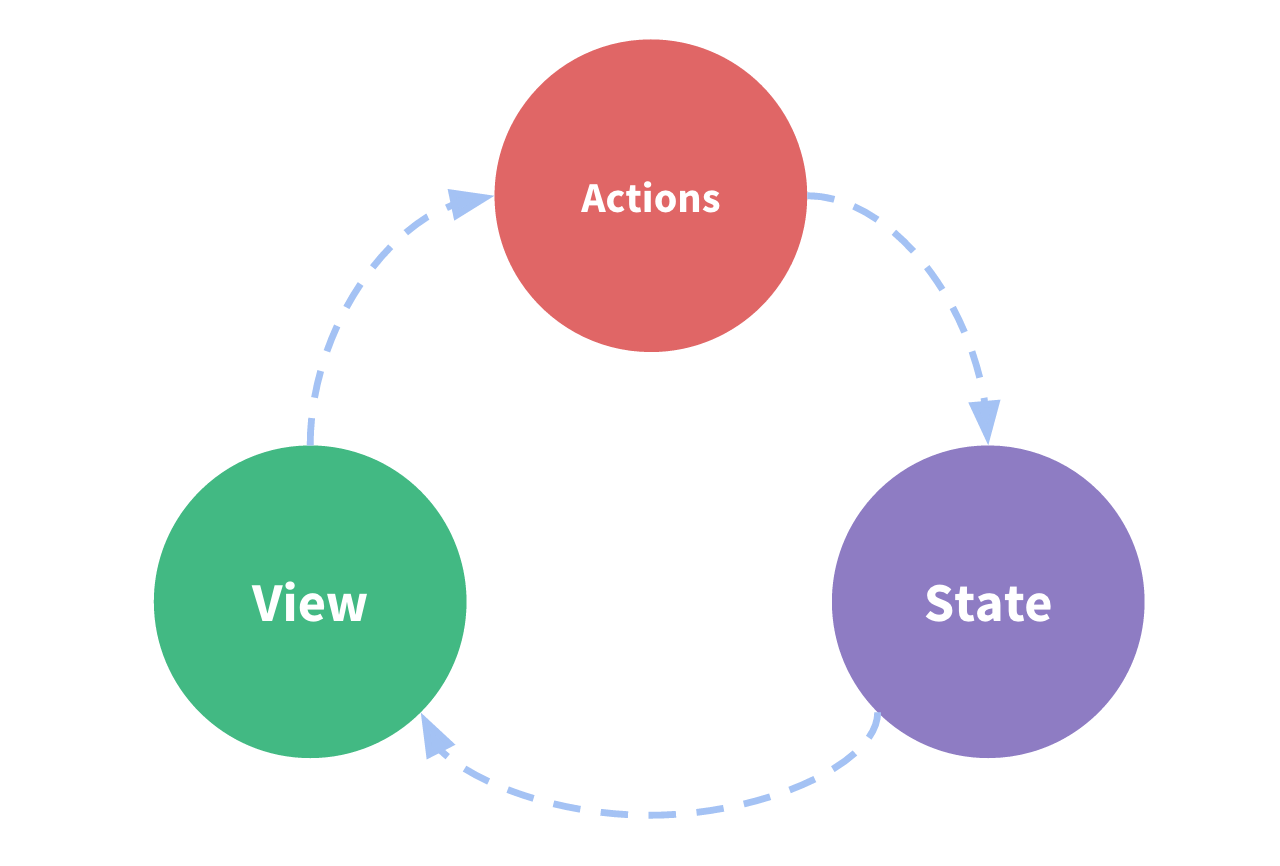
GUI 开发,通常有3个角色:
state: 描述数据状态
action: 管理 state
view: 消费 state,触发 action 逻辑
换成 Android 开发容易理解的话,就是
state = immutable data class
actions = repository, viewmodel, presenter, service, controller, manager
view = view, activity, fragment
一个简单的 counter 示例:
1
2
3
4
5
6
7
8
9
10
11
12
13
14
15
16
17
18
19
20
21
22
23
24
25
26
27
28
29
30
31
32
33
34
35
36
37
38
39
|
data class State(
val count: Int = 0
)
class CounterViewModel {
privte val stateListeners = mutableList<(State)->Unit>()
var state = State()
private set
fun increment() {
state = state.copy(count = state.count + 1)
stateListeners.foreach {
it(state)
}
}
fun onStateChange(listener: (State)->Unit) {
stateListeners.add(listener)
listenter(state)
}
}
class CounterFrament(viewModel: CounterViewModel) {
init {
viewMode.onStateChange {
counterText = viewmodel.state.count
}
setOnClickListener {
viewModel.increment()
}
}
}
|
因为 Android Architect 里边,把数据层称为 Repository,为了更符合Android 平台的称呼,所以接下来说的 Repsitory = Action。
核心
看了上面的示例,就会发现,核心只有两个:
- immutable data class( = state)
- Repository( = action): 管理数据
实现
state 是 任意 immutable data class 就可以。不需要另外多余的抽象。
所以把实现的重点放到 Repository
Repository 需要关心:
- 存储 state
- 分发 state
- 更新 state
逻辑的生命周期管理
分发 state,对应就有 接收state,这里是 1:N 的关系,1 个 state 可能有 N 个接收者,
Repository 作为 state 生产者,定位类似 kotlin flow, 只管分发数据,消费者决定怎么使用数据,
通常只有使用者知道什么时候不需要数据了,所以我们可以把监听数据这部分的生命周期管理交给使用者,这样就可以借助 kotlin coroutine scope,消费者自己管理监听&取消监听数据。
Repository 作为数据容器,action 可能很简单,也可能很复杂,
业务上很可能是需要有 诸如 启动,销毁的流程,但是 RxStateRepository 不知道如何处理,这部分属于不能抽象的部分,只能留给使用方(RxStateRepository 的 子类等)处理
1
2
3
4
5
6
7
8
9
10
11
12
13
14
15
16
17
18
19
20
21
22
23
24
25
26
27
28
29
30
31
32
33
34
35
36
37
38
39
40
41
42
43
44
45
46
47
48
49
50
51
52
53
54
55
56
57
58
59
60
61
62
63
| package xyz.icode.mvs
import kotlinx.coroutines.flow.Flow
import kotlin.reflect.KProperty1
interface RxState
interface RxRepo<State : RxState> {
val state: State
fun RxRepo<State>.setState(reducer: State.() -> State)
fun asFlow(): Flow<State>
suspend fun <A : Any> onEach(property: KProperty1<State, A>, action: (A) -> Unit)
suspend fun <A : Any> onEach(property: KProperty1<State, A>): Flow<A>
suspend fun onEach(action: (State) -> Unit)
}
fun <State: RxState> RxRepo(initState: State): RxRepo<State> = RxRepoImpl(initState)
|
实现类
1
2
3
4
5
6
7
8
9
10
11
12
13
14
15
16
17
18
19
20
21
22
23
24
25
26
27
28
29
30
31
32
33
34
35
36
37
38
39
40
41
42
43
44
45
46
47
48
| internal
class RxRepoImpl<State : RxState>(initState: State) : RxRepo<State> {
private val stateFlow = MutableStateFlow(initState)
override val state: State
get() = stateFlow.value
override fun asFlow(): Flow<State> = stateFlow.asStateFlow()
@Suppress("UNCHECKED_CAST")
override fun RxRepo<State>.setState(reducer: State.() -> State) {
stateFlow.value = reducer(state)
}
override suspend fun <A : Any> onEach(
property: KProperty1<State, A>,
action: (A) -> Unit
) {
childScope().launch {
stateFlow.collectLatest {
action(property.get(it))
}
}
}
override suspend fun onEach(action: (State) -> Unit) {
childScope().launch {
stateFlow.collectLatest(action)
}
}
override suspend fun <A : Any> onEach(property: KProperty1<State, A>): Flow<A> {
val scope = childScope()
return flow {
scope.launch {
stateFlow
.collectLatest {
emit(property.get(it))
}
}
}
}
private suspend inline fun childScope(): CoroutineScope {
return CoroutineScope(context = currentCoroutineContext())
}
}
|
使用 Demo
1
2
3
4
5
6
7
8
9
10
11
12
13
14
15
16
17
18
19
20
21
22
23
24
25
26
27
28
29
30
31
32
33
34
35
36
37
38
| data class CounterState(
val count:Int = 0
)
class CounterRepo: RxStateRepo(CounterState(0)) {
fun increment() {
setState {
copy( count = count + 1)
}
}
}
class CounterView {
private val counter = CounterRepo()
private val scope = MainScope()
init {
scope.launch {
counter.onEach(CounterState::count) {
text = "Click $it"
}
}
setOnClickListener {
counter.increment()
}
}
}
class FooViewModel: ViewModel(),
RxStateRepo by RxStateRepo(FooState()) {
fun updateFooToBar(bar: Any) {
setState {
copy(foo = bar)
}
}
}
|
参考
- Redux Essentials
- Mavericks: Android on Autopilot
- 源码 & Demo: RxState for Android